One of the most common things newcomers say about moving to an Ontario town is that it took them a while to figure out what was actually going on. Events and activities exist, often plenty of them, but they are not always easy to find unless you know where to look. There is no single events app for small-town Ontario. Instead, information is spread across half a dozen sources. Here is where to check.
Municipal Websites and Event Calendars
Your town's official website is the first place to look. Most Ontario municipalities maintain an event calendar or community listing page. These typically cover town-run programs like public skating, swimming lessons, parks and rec classes, and civic events like Canada Day celebrations or Remembrance Day ceremonies.
The quality varies. Some municipalities, like Collingwood or Barrie, have polished, regularly updated calendars. Smaller towns may have a more basic page that only covers the biggest events. Either way, bookmark your town's site and check it periodically. It is also where you will find information about council meetings, public consultations, and notices that affect daily life.
Public Libraries
Ontario public libraries are quietly one of the best sources of free programming in any community. Beyond lending books, most branches run a packed schedule of events: children's story times, book clubs, maker workshops, technology help sessions, author readings, tax clinics in spring, and summer reading programs.
Check your local library's website or pick up a printed program guide at the branch. Many libraries also host community groups that use their meeting rooms, so the library event board is often a window into what other organizations are doing. If you are new to town and looking for ways to meet people, a library program is a low-pressure place to start.
Arena and Recreation Schedules
The community arena is the social hub of many Ontario towns, especially from October through March. Public skating, hockey leagues, figure skating clubs, and special events all run out of the local arena. Most municipalities post their arena schedule online or at the facility. In some towns, the arena is part of a larger recreation complex that includes a pool, gymnasium, or fitness centre.
Recreation departments also run seasonal program guides. These come out a few times a year (typically fall, winter, and spring/summer) and list everything from yoga classes to pickleball leagues to children's camps. Registration usually opens on a specific date and popular programs fill quickly. Watch the municipal website or social media for registration announcements. For families, our family moving checklist covers how to get signed up for sports and activities.
Community Facebook Groups
For real-time, informal event information, local Facebook groups are hard to beat. Almost every Ontario town has at least one active community group, and many have several. These are where you will hear about a pop-up vendor market this Saturday, a live band at the pub on Friday, a charity fundraiser at the Legion, or a new trail that just opened.
Search Facebook for your town name, and you will likely find groups like "[Town Name] Community," "[Town Name] Events," or "[Town Name] Buy and Sell." Join a few and scroll through regularly. People also post questions in these groups ("Does anyone know if there's a craft fair this weekend?"), so they function as a kind of informal town notice board.
Some communities also have active Instagram accounts run by local businesses, tourism organizations, or community boosters. These can be useful for visual event promotion, especially in tourism-oriented towns like Huntsville or Perth.
Local Newspapers
Weekly and bi-weekly newspapers remain a strong source of event information in Ontario towns. Papers like the Orillia Packet and Times, the Collingwood Connection, or the Perth Courier publish event listings, preview articles about upcoming activities, and community calendars. Many have online editions or separate websites with event sections.
Some communities are also served by free online news sites or blogs that cover local events. A quick search for "[your town] news" or "[your town] events" will surface these. They are especially useful for staying on top of seasonal events like fall fairs, Christmas parades, and summer festival lineups.
BIA and Downtown Events
If your town has a Business Improvement Area (BIA) or downtown association, it likely organizes events throughout the year. These might include sidewalk sales, themed shopping nights, Santa Claus parades, street festivals, and "shop local" promotions. BIA events tend to cluster around holiday weekends and seasonal transitions.
Check whether your local BIA has a website or Facebook page. In towns like Midland or Cobourg, the downtown association is one of the most active event organizers in the community.
Farmers Markets and Seasonal Markets
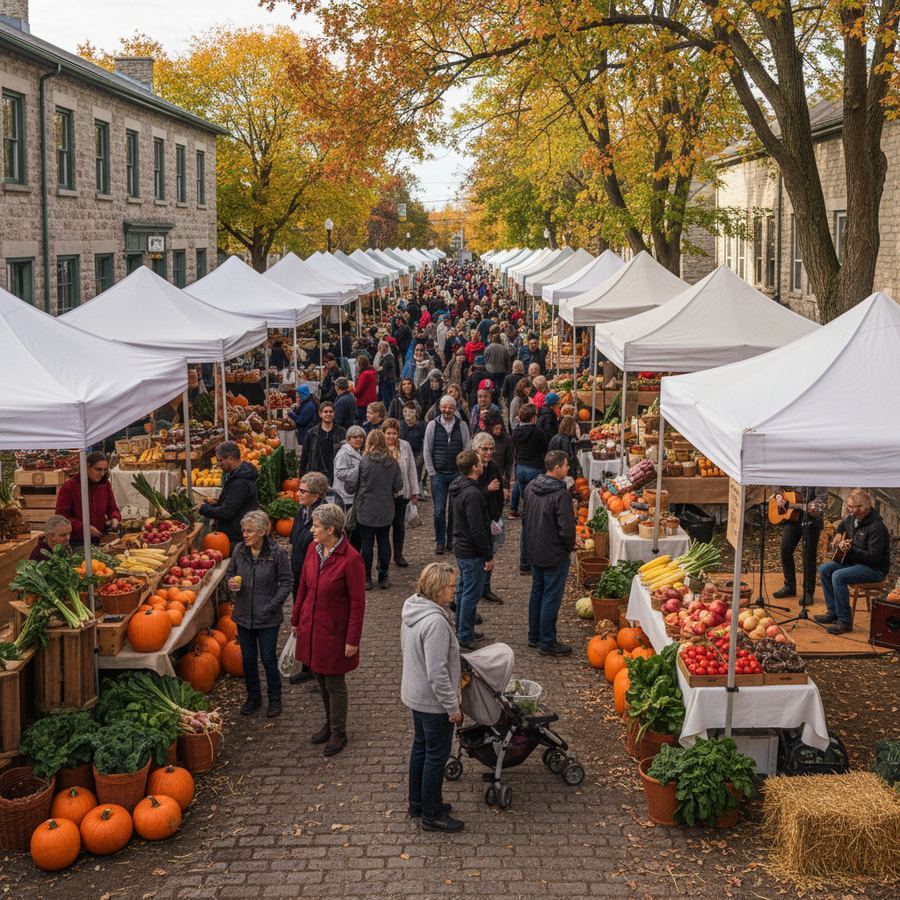
Farmers markets run in nearly every Ontario town from late spring through fall, and some operate year-round in indoor locations. They are not just for produce. Markets often feature baked goods, prepared foods, crafts, live music, and a social atmosphere that makes them a weekly gathering point.
Find your local market through Farmers' Markets Ontario, which maintains a directory of member markets across the province. Market schedules (day of the week, hours, and start/end dates for the season) are posted there and on individual market websites or Facebook pages.
Seasonal markets, like Christmas craft fairs and holiday markets, pop up in November and December in church halls, community centres, and arenas. Watch local Facebook groups and newspaper listings for dates.
Service Clubs, Churches, and Community Organizations
Rotary clubs, Lions clubs, Legions, Kinsmen, Knights of Columbus, and church groups run a surprising number of events in Ontario towns. Pancake breakfasts, turkey suppers, bingo nights, charity golf tournaments, and community dinners are staples of the small-town calendar. These organizations do not always have strong online presences, so you may hear about their events through posters at the grocery store, announcements in the newspaper, or word of mouth.
If you are looking to get involved beyond attending, volunteering with one of these organizations is one of the fastest ways to build connections in a new community.
Putting It All Together
The trick to staying informed in a small Ontario town is to check multiple sources regularly. No single platform captures everything. A reasonable routine might look like this:
- Bookmark your municipal website and check the event calendar weekly
- Follow your library branch on social media or pick up their program guide
- Join two or three local Facebook groups and scroll them a few times a week
- Grab the local newspaper when you see it
- Walk past the community bulletin boards at the grocery store and library
Within a few weeks of doing this, you will have a solid picture of what is happening in your community. And once you start attending events, you will meet people who tell you about the next one. That is how the information network works in smaller communities. For more on getting oriented in your new town, see our guide to settling in.