Raising Kids in a Small Ontario Town
One of the most common reasons people move to a smaller Ontario community is their kids. More space, safer streets, a backyard, a shorter drive to school. And for the most part, that calculation works out. Small-town Ontario is a genuinely good place to raise a family. But it comes with a set of tradeoffs that are worth understanding before you arrive, and a set of logistics that are worth tackling early.
Schools
Ontario's public school system operates through district school boards, and most small towns have at least one elementary school and access to a secondary school, though the high school might be a bus ride away in a neighbouring town. You will generally choose between a public board and a Catholic board. In some areas, like Penetanguishene and Midland, there are also French-language options.
Class sizes in small-town schools tend to be reasonable, and teachers often know students and families by name. The flip side is that course selection at the high school level can be more limited than what you would find in a city. Advanced Placement programs, specialized arts or tech streams, and certain electives may not be available locally. Some students supplement with online courses through the Ontario e-learning system.
Registration is straightforward. You will need proof of address and your child's previous school records. Do not wait until September: contact the school office as soon as you have a confirmed moving date. They can walk you through everything and connect you with the bus service if your child needs transportation.
Healthcare
Finding a family doctor is the single biggest frustration for newcomers to small-town Ontario, and it is not limited to newcomers. Doctor shortages affect rural and small-town communities across the province. Many family practices have closed their rosters, and waitlists can stretch a year or more.
Here is what to do: register with Health Care Connect, Ontario's provincial matching service for people without a family doctor. Also check local community health centres, which operate on a different model and sometimes have shorter waits. Walk-in clinics exist in most towns on this site, though hours may be limited.
For kids specifically, make sure their OHIP cards are up to date and that you have copies of immunization records. Ontario schools require proof of immunization, and your local public health unit will follow up if anything is missing.
Recreation and Activities
This is where small towns really deliver. Minor hockey, soccer leagues, swimming lessons, figure skating, baseball, and basketball are available in almost every community we cover. Registration typically happens in spring for summer programs and late summer for fall and winter. Spots fill up quickly in popular programs, so do not assume you can sign up at the last minute.
Municipal recreation departments are the hub. Towns like Barrie and Collingwood have extensive program guides published seasonally. Smaller communities like Stayner and Burk's Falls may have fewer options but often make up for it with volunteer-run leagues and community-organized activities.
Libraries are another major resource. Ontario's public library system is excellent, and most small-town branches run kids' programs year-round: story time, coding workshops, reading challenges, and summer camps. Get a library card in your first week.
The Day-to-Day
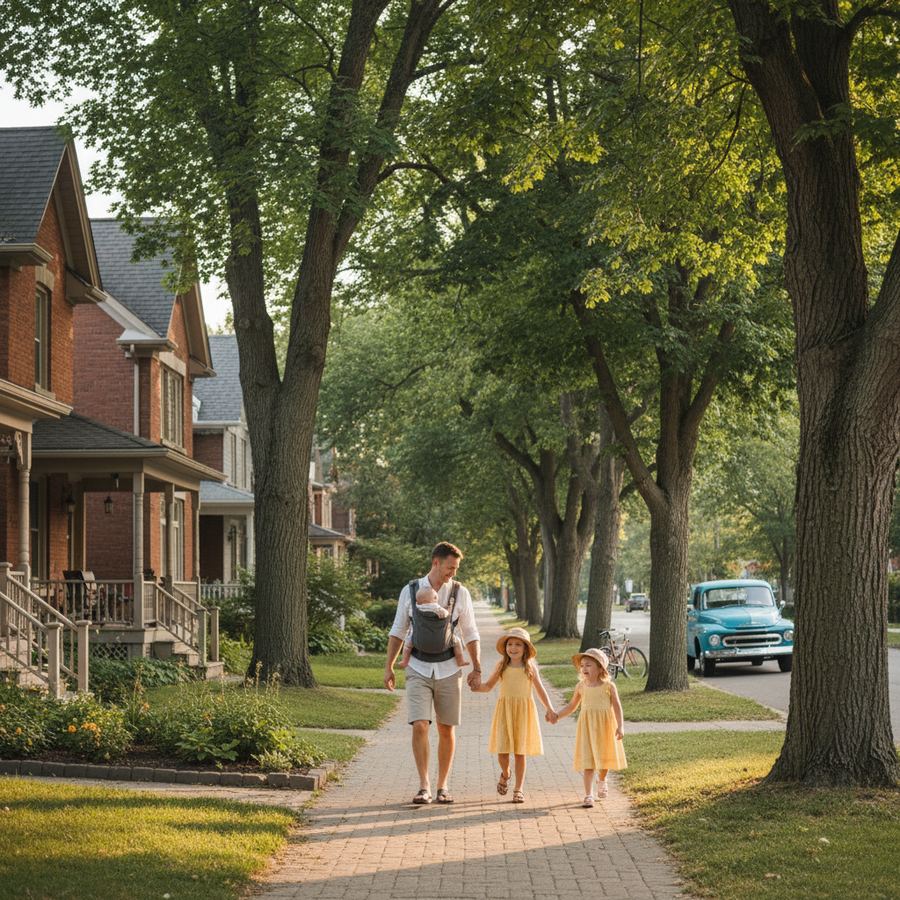
Daily life with kids in a small town looks different in ways both good and less good. The good: your children will likely have more independence and outdoor time. Many kids walk or bike to school. The community is small enough that people look out for each other's families.
The trade-off: you will drive more. Dance class is in the next town. The orthodontist is 30 minutes away. Birthday parties involve coordinating across a wider geography. Having a reliable vehicle is not optional when you have kids in activities.
Childcare is another area where demand outstrips supply in many small towns. Daycare waitlists can be long, and finding before- and after-school care takes planning. Start looking early, and ask other parents in the community for recommendations on home daycares and co-op arrangements that may not show up in official directories.
Family Moving Checklist
If you are in the early stages of a family move, our family moving checklist puts all the action items in one place: school registration, healthcare enrollment, activity sign-ups, and more.
Related Guides
- Settling Into an Ontario Town covers the general orientation process, including tips that apply to families.
- Winter Prep for New Ontario Residents is especially relevant if your kids have never dealt with real winter before. Snow pants, bus cancellation protocols, and keeping the house warm.
- The community pages include local details on schools, recreation centres, and family services for each of our 15 towns.