Moving with kids adds a layer of urgency to everything. You are not just setting up a household; you need schools sorted, activities found, and a doctor lined up, preferably before the boxes are unpacked. This checklist covers the practical steps for families relocating to an Ontario community, roughly in the order they need to happen.
Schools: Registration and Board Selection
Ontario has four publicly funded school systems, and your first decision is which one fits your family:
- English public (the default for most families)
- English Catholic (requires a Catholic baptismal certificate for the parent, though students of other faiths are often accepted where space permits)
- French public (for families who want French-language education)
- French Catholic
Each system has its own school board. If you are moving to the Simcoe County area, for example, the Simcoe County District School Board (SCDSB) runs English public schools, while the Simcoe Muskoka Catholic District School Board handles English Catholic. Other regions have their own boards. Visit your board's website and use the "find your school" tool to determine which school serves your address.
What you need for registration:
- Proof of address (utility bill, lease agreement, or property tax bill)
- Child's birth certificate or passport
- Immunization records (required by public health; you will hear from the local health unit if records are missing)
- Previous school records or report cards (helpful but not always required to start)
- Custody or guardianship documents, if applicable
If you are moving mid-year, contact the school directly. Most schools handle mid-year transfers routinely. If your child has an Individual Education Plan (IEP) or needs special education supports, bring those documents and request a meeting with the school's special education resource teacher early on.
Daycare and Before/After School Care
Licensed daycare spots in Ontario are in high demand. Waitlists of several months to over a year are normal in many communities. Start the process immediately, even if your move date is still weeks away.
- Search for licensed providers using the Ontario licensed child care finder
- Many municipalities run centralized waitlists. Contact your local municipal office to find out if one exists in your area
- Ask about home-based daycare providers. Licensed home child care can be a good option in smaller towns where centre-based care is limited
- Before and after school programs may be run by the school board, the YMCA, or private operators. Ask the school office what is available at your child's school
If you qualify for the Canada-Wide Early Learning and Child Care (CWELCC) fee reduction, ask your provider about current per-day rates after the subsidy.
Health Care for the Family
Getting the whole family connected to health care is a priority. Here is the checklist:
- OHIP cards: If you are moving from another province, apply for Ontario Health Insurance Plan (OHIP) coverage at a ServiceOntario location. Bring ID and proof of residency. Coverage begins the first day of the third month after you establish residency (there is a waiting period from out-of-country; inter-provincial transfers may be faster)
- Family doctor: Register with Health Care Connect if you need a family doctor. Also ask at local clinics whether they are accepting new patients. Walk-in clinics and urgent care centres can handle immediate needs in the meantime
- Dentist: Many families overlook this in the moving rush. Ask neighbours or check Google reviews for family dental practices in your area. If your children are eligible for the Canadian Dental Care Plan, confirm your provider participates
- Immunization records: Your local public health unit tracks immunizations for school-age children. After registering for school, submit your child's records to the health unit or expect a follow-up letter
- Pharmacy: Choose a local pharmacy and transfer any ongoing prescriptions. Most pharmacies can handle this with a phone call to your previous pharmacy
Sports and Recreation
Getting kids into activities helps them settle in and make friends. Registration timelines vary by sport:
- Hockey and skating: Minor hockey registration opens in spring for fall/winter. Figure skating follows a similar timeline. Check your arena website or the local association page
- Soccer: Outdoor league registration is usually late winter or early spring. Indoor leagues may run through winter
- Swimming: Municipal pools offer lessons and swim teams. Registration happens in seasonal waves (fall, winter, spring/summer)
- Other activities: Dance, martial arts, gymnastics, and other programs set their own schedules. Most have websites or Facebook pages with details
Watch the municipal recreation guide, which is published seasonally and lists all town-run programs. Registration dates are posted on the town's website and social media. Popular programs fill up on the first day, so mark those dates on your calendar. For more on finding activities and events, see our guide to finding local events.
Library Cards
Get library cards for the whole family as soon as you have proof of address. Ontario public libraries are free for residents and offer far more than books:
- Children's and teen programs (story time, LEGO club, coding workshops, homework help)
- Summer reading programs that keep kids engaged during the break
- Free access to digital resources (eBooks, audiobooks, online learning platforms)
- Museum and park passes available for borrowing at some branches
- A warm, free place for kids to hang out after school
Parks, Playgrounds, and Outdoor Spaces
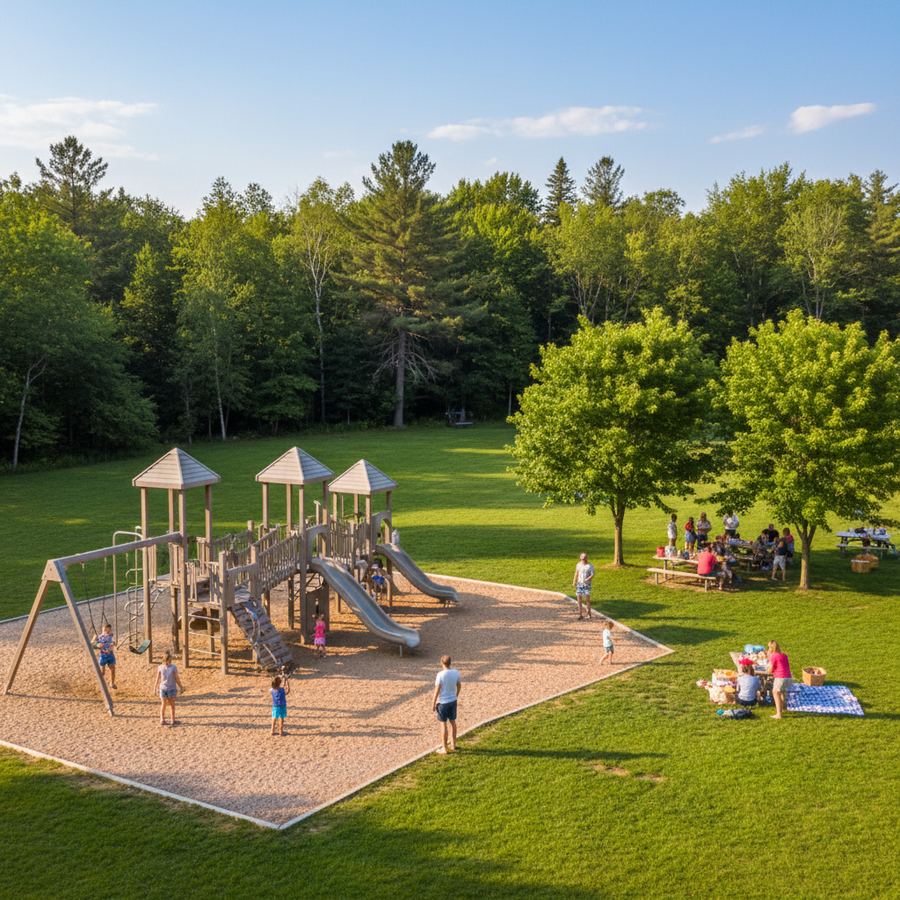
Scope out your local parks early. Most Ontario towns have multiple parks with playgrounds, splash pads (seasonal), sports fields, and walking trails. Your municipal website will have a parks listing, or you can simply explore the neighbourhood.
If you are near water, find out about public beaches and waterfront access. Conservation areas offer hiking, swimming, and seasonal programs at modest day-use fees. An Ontario Parks annual day-use pass pays for itself quickly if you visit provincial parks a few times over the summer.
Setting Up the Household
A few family-specific household items to address:
- School bus routes: Your school board's transportation consortium posts route info online before the school year. Save the bus cancellation page for winter (more in our winter preparation guide)
- Emergency contacts: Build a list of local contacts for the school's emergency pickup list
- Update your address: Driver's licence and vehicle registration (ServiceOntario), Canada Revenue Agency, your bank, employer, and benefits programs
Connecting with Other Families
Meeting other parents makes everything easier. The school yard at drop-off and pickup is the obvious starting point, but there are others:
- Ontario Early Years Centres (now called EarlyON Child and Family Centres) offer free drop-in programs for children from birth to age six and their parents. These are excellent for meeting other families with young children
- Sports sidelines and arena lobbies during kids' activities
- Parent council meetings at your child's school
- Local Facebook parenting groups for your area
For more general advice on getting oriented in your new community, see our guide to settling into an Ontario town. And if you are still searching for the right place to land, our housing search guide covers where to look.