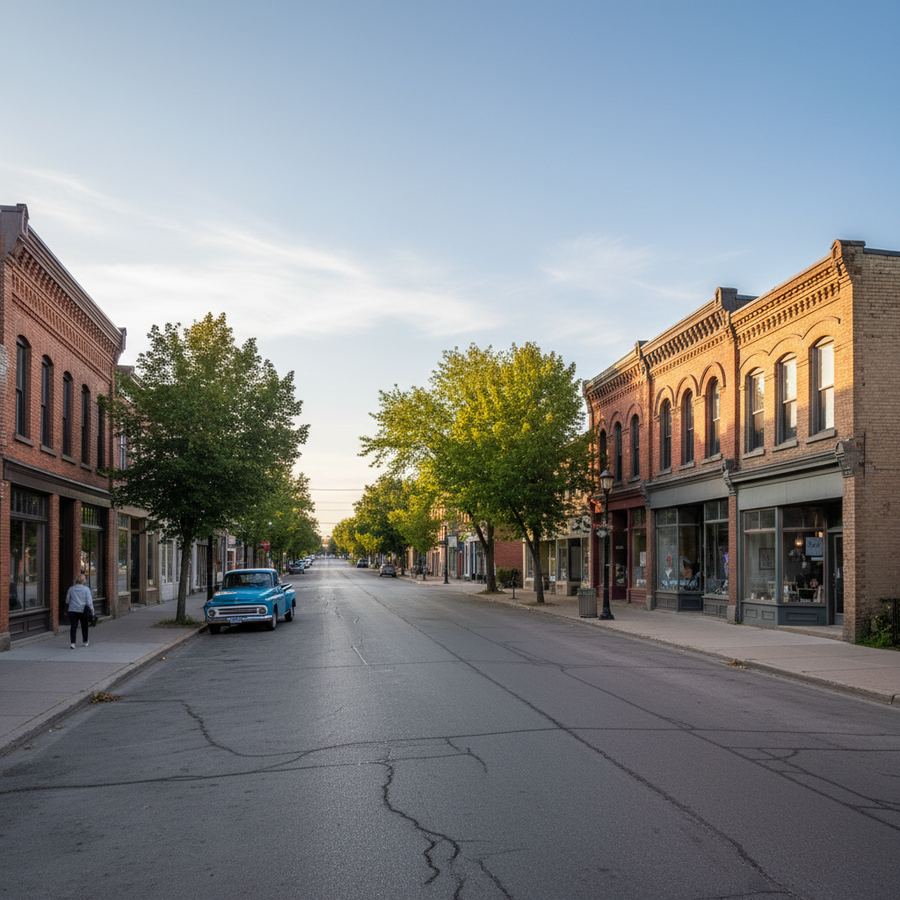
You have the keys. The boxes are stacked in the living room. Now what? The first few weeks in any Ontario town follow a roughly predictable pattern, whether you have landed in Collingwood, Cobourg, or somewhere in between. This guide walks through the practical steps, in roughly the order you will need them.
Day One: Utilities and Internet
Most Ontario towns are served by a local utility provider for electricity and water. Your landlord or real estate lawyer may have already given you the name, but if not, check the municipal website for your town. Hydro accounts typically need to be transferred into your name within a few days of moving in. You will need your new address and a piece of ID.
For internet, your options depend on location. Larger towns usually have Bell and Rogers coverage. Smaller or more rural communities may rely on providers like Xplornet (now Xplore) or local wireless ISPs. Ask your neighbours what works best in your specific area. This is honestly the fastest way to find out which provider delivers consistent speeds on your street.
Natural gas (Enbridge in most of Ontario) can also be set up online or by phone. If your home uses propane or oil heat instead, you will need to arrange a delivery company. Ask at the local hardware store or check community Facebook groups for recommendations.
Week One: Health Care
Finding a family doctor is one of the biggest challenges for newcomers across Ontario. Many communities have a shortage, and waitlists are common. Start here:
- Health Care Connect is the provincial program that matches people without a doctor to available physicians. Register through ontario.ca or call 1-800-445-1822.
- Walk-in clinics can handle immediate needs while you wait. Search your town name plus "walk-in clinic" to find hours and locations.
- Community Health Centres exist in many smaller towns and accept patients who do not have a family doctor. They often have nurse practitioners, social workers, and other supports under one roof.
If you are new to Ontario and do not yet have an OHIP card, apply at a ServiceOntario location. Bring your proof of residency, citizenship or immigration documents, and a supporting identity document. There may be a three-month waiting period if you are arriving from outside Canada.
Week One to Two: Schools and Childcare
If you have children, registering for school is an early priority. Ontario has four publicly funded school systems: English public, English Catholic, French public, and French Catholic. Your local school board's website will have a "find your school" tool based on your address.
For families in the Simcoe County area, that means the Simcoe County District School Board (SCDSB) or the Simcoe Muskoka Catholic District School Board. Other regions have their own boards. Registration usually requires proof of address, immunization records, and your child's birth certificate or passport. Check our family moving checklist for more detail.
Childcare and daycare waitlists in Ontario can be long. If you need licensed daycare, start by searching on the provincial licensed child care search tool. Many municipalities also run centralized waitlists. Do not wait to get your name on the list.
Week Two: Getting Connected Locally
The public library is one of the most underrated resources in any Ontario town. A library card is free with proof of address, and beyond books, your local branch likely offers free WiFi, community room bookings, children's programs, newcomer resources, and access to museum passes or provincial park day passes.
Introduce yourself to your neighbours. This is not just politeness. In smaller towns, neighbours are often your first source of information about garbage pickup schedules, which mechanic is reliable, and when the farmer's market runs. Many people in Ontario's smaller communities are genuinely happy to help someone new get oriented.
Join the local community Facebook group for your town. Nearly every Ontario municipality has one, and they are active. People post about road closures, lost pets, event reminders, and restaurant recommendations. It is a fast way to get a feel for what matters locally. For more on finding things to do, see our guide on finding local events in Ontario.
Week Three to Four: Learning the Local Rhythms
Ontario towns run on seasonal rhythms that take a little time to learn. Garbage and recycling pickup schedules vary by municipality and sometimes change seasonally. Your town's website will have a waste calendar, and many offer an app or email reminders.
Grocery shopping in smaller towns works differently than in a city. You might have one or two main grocery stores, and people often supplement with farm stands, butcher shops, and seasonal markets. If you are used to late-night shopping, note that many stores in smaller communities close by 8 or 9 PM.
Banking is straightforward. The major banks (TD, RBC, Scotiabank, BMO, CIBC) have branches in most towns, though hours may be limited. Credit unions are also common and often have strong local roots.
Getting around varies widely. Some towns like Barrie have public transit. Many smaller communities do not. If you are without a car, check whether your municipality has a community transportation program. Some areas have volunteer driver networks or subsidized ride services for medical appointments.
The First Month and Beyond
By the end of your first month, the unfamiliar starts becoming routine. You will know which coffee shop opens earliest, where to park on main street, and that the fire siren goes off at noon on Wednesdays (it is just a test). If you are moving before winter, take some time now to prepare. Our winter preparation guide covers what you need to know about snow tires, heating costs, and dressing for the cold.
Give yourself grace during this transition. Every community has its quirks, and it takes a full cycle of seasons to really feel like you know a place. But Ontario's smaller towns have a way of welcoming people who show up and get involved. You are already doing the hard part by being here.