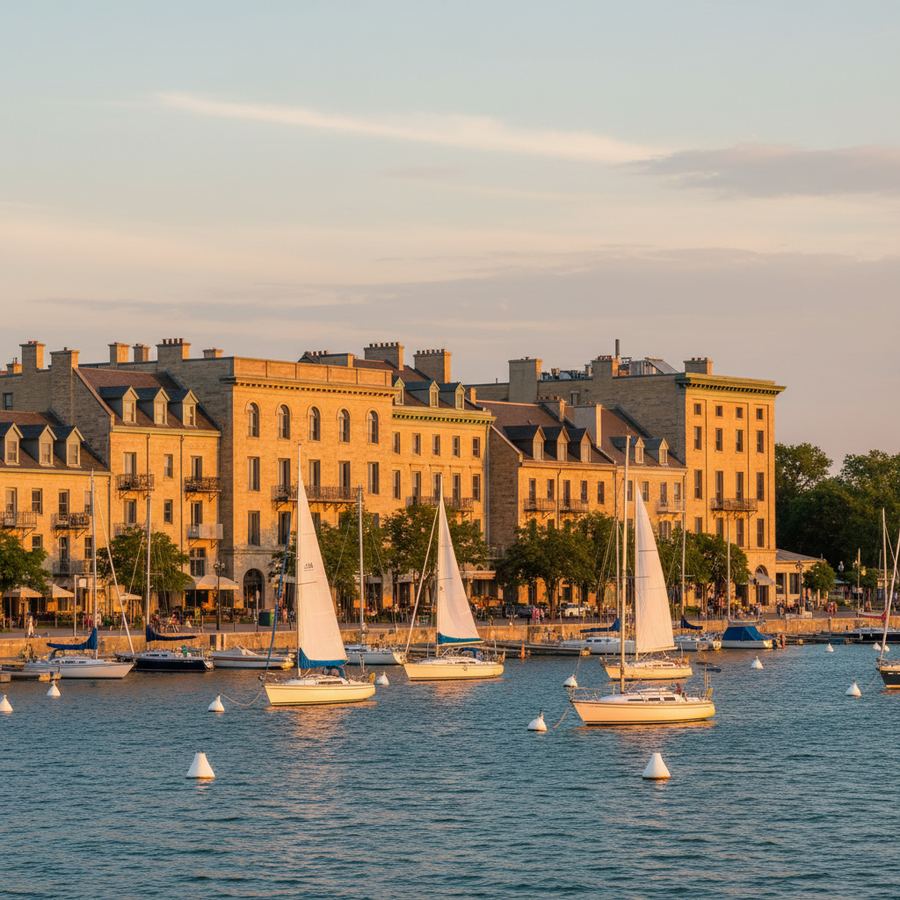
Kingston is a city of about 135,000 people at the eastern end of Lake Ontario, where the lake meets the St. Lawrence River and the Rideau Canal begins its route north to Ottawa. It is by far the largest community covered on this site, and it has a depth of services, culture, and infrastructure that most of the smaller towns we profile do not. Kingston is roughly two and a half hours east of Toronto on Highway 401 and about two hours south of Ottawa. It is home to Queen's University, the Royal Military College of Canada, and Canadian Forces Base Kingston, all of which shape the city's identity, economy, and population. The city is built on limestone, which gives its historic buildings a distinctive grey character that earned it the nickname "The Limestone City." If you have recently moved here or are planning to, this page covers the practical essentials.
Where to Look for Housing
Kingston's housing market is expensive for Eastern Ontario, driven largely by the university, the military, and a steady influx of buyers from the GTA looking for a smaller city with strong amenities. That said, it remains considerably more affordable than Toronto, and the range of housing options is wider than what you will find in any of the smaller communities on this site.
The market breaks down roughly by area. The Sydenham Ward and inner harbour neighbourhoods near downtown and Queen's University are the most expensive, with a mix of heritage limestone homes, Victorian rowhouses, and smaller detached houses. The west end along Princess Street and toward the Cataraqui Centre has more suburban development and tends to be more affordable. The east end, including the Pittsburgh area and the Highway 15 corridor, offers newer construction and rural properties. Barriefield Village, across the Cataraqui River, is a small heritage community with character homes and a strong sense of identity.
The rental market is influenced by the student population. Thousands of Queen's and St. Lawrence College students compete for rentals, particularly in the University District, which can make the market tight and seasonal. If you are not a student, looking outside the immediate university area will give you more options and often better value. Check Kijiji, Facebook Marketplace, PadMapper, and the Kingston community Facebook groups. Our Ontario housing guide has broader strategies for navigating Ontario housing markets.
Where to Find Local Events
Kingston has one of the strongest arts, food, and cultural scenes of any mid-sized city in Ontario. The Grand Theatre hosts professional theatre, music, and dance productions year-round. The Isabel Bader Centre for the Performing Arts, part of Queen's University, brings in national and international performers. The Kingston Canadian Film Festival, the Limestone City Blues Festival, and Kingston WritersFest are annual draws. Fort Henry, a UNESCO World Heritage Site, runs historical programming and the Fort Henry Guard ceremonial performances through the summer.
The downtown waterfront and Springer Market Square serve as the city's public gathering spaces. The Kingston Public Market runs every Tuesday, Thursday, and Saturday from spring through fall and is one of the oldest markets in Ontario. Restaurants, cafes, and bars along Princess Street and the surrounding blocks give the city a culinary depth that most communities this size cannot match. The craft brewery and distillery scene has grown considerably in recent years.
For staying current, the Kingston Whig-Standard and YGK news cover local events comprehensively. The City of Kingston maintains an events calendar on its website. Visit Kingston, the tourism organization, posts a thorough listing of festivals and attractions. The community Facebook groups and Reddit's r/KingstonOntario are active and useful for local recommendations. For general advice on plugging into community life, our events guide covers practical approaches.
Where to Check Weather and Conditions
Kingston sits at the junction of Lake Ontario and the St. Lawrence River, which moderates temperatures somewhat but also creates its own weather patterns. Winters are cold, with January averages around minus 7 or 8, and wind off the lake can make the waterfront noticeably colder than areas further inland. Snowfall is moderate, and lake-effect squalls can hit without much warning. Freezing rain is a known hazard in this part of Eastern Ontario, and the 1998 ice storm remains a reference point for long-time residents. Environment Canada covers Kingston directly, and the WeatherCAN app provides severe weather alerts.
Highway 401 is the main east-west corridor and is well maintained year-round, though winter storms can still make travel challenging. Highway 15 runs north toward Smiths Falls and the Ottawa area. Ontario 511 provides real-time highway conditions. The City of Kingston handles local road plowing and posts updates during significant storms. School bus cancellations are announced through Frontenac Student Transportation Services.
Summers in Kingston are warm and often humid, with temperatures reaching into the high 20s and low 30s. The waterfront location means lake breezes, but also thunderstorms rolling along the Lake Ontario corridor. If this is your first Ontario winter, our winter prep guide covers everything from snow tires to emergency preparedness.
Family and Everyday Info
Kingston has strong educational options at every level. The Limestone District School Board (public) and the Algonquin and Lakeshore Catholic District School Board (Catholic) operate schools across the city. There are multiple secondary schools, including Kingston Collegiate and Vocational Institute (KCVI), one of the oldest high schools in Ontario, and Frontenac Secondary School. The French-language boards also have schools in the area. Queen's University and St. Lawrence College provide post-secondary options. Registration for the school boards is handled through their websites.
Kingston General Hospital, now part of Kingston Health Sciences Centre, is a major regional hospital and a teaching hospital affiliated with Queen's. It provides comprehensive services including emergency care, specialized medicine, surgery, and cancer treatment. Hotel Dieu Hospital also operates in Kingston. The healthcare infrastructure here is significantly stronger than in smaller communities, though finding a family doctor accepting new patients is still a wait. Register with Health Care Connect, but know that your options for walk-in clinics and urgent care are much better here than in most of the towns on this site.
Kingston has the full range of shopping and services you would expect from a city of its size. Groceries, big-box retail, specialty shops, and a vibrant independent restaurant and cafe scene are all well represented. The Cataraqui Centre is the main shopping mall, and the Princess Street corridor downtown has independent retail and dining. Kingston also has Kingston Transit, a public bus system that covers the city reasonably well, which sets it apart from nearly every other community on this site. Cycling infrastructure is decent, and the city is walkable in the downtown core.
The waterfront is central to daily life. Breakwater Park, Lake Ontario Park, and the Waterfront Trail offer year-round recreation. The Thousand Islands are accessible by boat from Kingston, and the Rideau Canal begins its route north from the city. Fort Henry and the Murney Tower are historical landmarks worth visiting early in your time here. Kingston is a city where you can walk to dinner, cycle to work, take the bus to the mall, and drive to a provincial park within 30 minutes. It has the services and culture of a much larger city in a manageable, livable package. For families sorting through the logistics of a move, our family moving checklist covers the key tasks for your first few weeks.
Learn More About Kingston
For municipal services, official notices, and community information, visit the City of Kingston website.