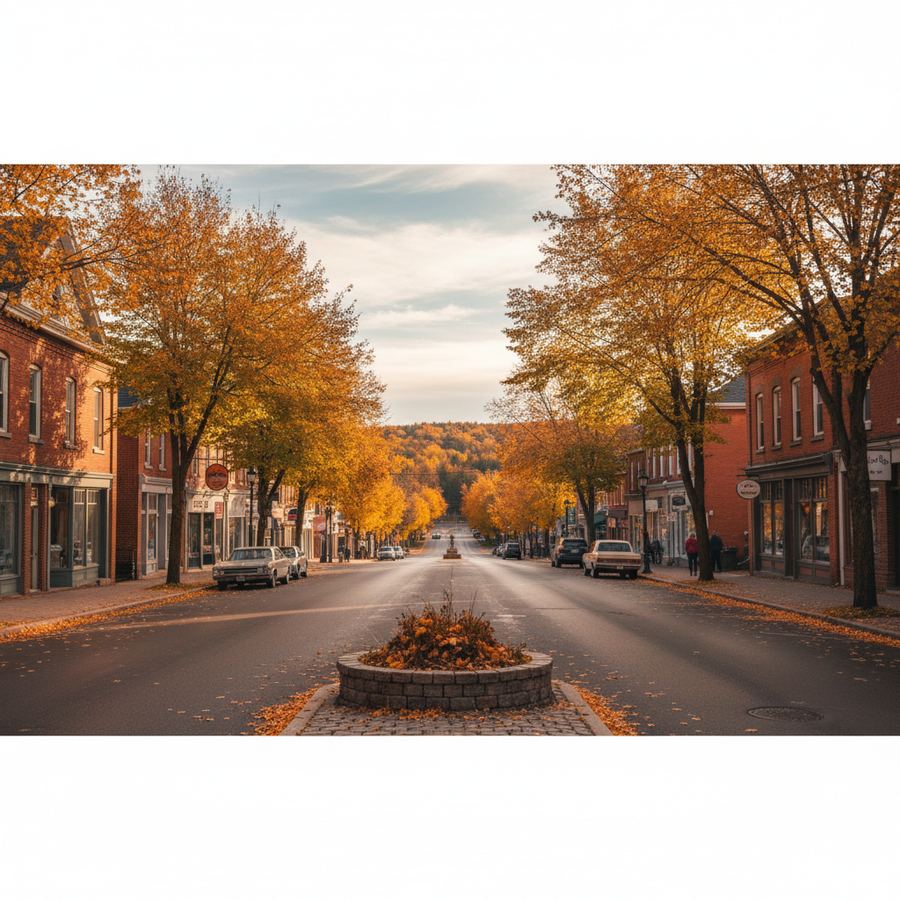
Orangeville is a town of about 30,000 people and the county seat of Dufferin County, located roughly 80 kilometres northwest of Toronto along the Highway 10 corridor. It sits at the headwaters of the Credit River and has long served as the commercial and administrative hub for the surrounding rural communities. Over the past decade, Orangeville has grown significantly as families and workers priced out of the GTA have moved further north. It has more urban services than most of the towns we cover on this site, but it still has a distinctly small-town feel. If you have recently moved here or are planning to, this page will help you get oriented.
Where to Look for Housing
Orangeville's housing market has been reshaped by GTA spillover. Prices have climbed considerably, though they remain more affordable than what you would pay in Barrie, Collingwood, or most communities within an hour of Toronto. The town has a mix of older homes in the established neighbourhoods near Broadway and First Street, newer subdivisions on the north and east edges, and townhouse and condominium developments that have been filling in over the past several years.
The rental market is competitive. Orangeville is large enough to have apartment buildings and purpose-built rental stock, but demand consistently outpaces supply. Check Kijiji, Facebook Marketplace, and local property management companies. The Orangeville community Facebook groups are active and sometimes surface rental listings before they hit the broader platforms. Basement apartments in older homes are common in this market and worth considering if you are flexible.
For purchases, Realtor.ca is the standard tool, and a local agent who knows Dufferin County will help you understand the differences between neighbourhoods. The west side of town near Island Lake Conservation Area tends to be more established, while newer construction is concentrated to the north and east. If you are willing to look just outside town, communities like Grand Valley, Shelburne, and Mono offer rural properties that may stretch your budget further. Our Ontario housing guide covers strategies for navigating housing in smaller markets.
Where to Find Local Events
Orangeville has a surprisingly active cultural scene for its size. Theatre Orangeville runs professional productions at the Orangeville Town Hall Opera House throughout the year and has built a strong regional reputation. The Blues and Jazz Festival, held each June, takes over Broadway with outdoor stages and draws performers from across the country. The Orangeville Farmers' Market runs on Saturdays through the growing season and is both a shopping destination and a social anchor for the community.
The Credit Valley Explorer, a seasonal tourist train, runs excursions through the surrounding countryside. Island Lake Conservation Area, just west of town, hosts events and is a year-round destination for hiking, fishing, and cross-country skiing. The Orangeville Public Library runs programs for all ages and serves as a genuine community hub, particularly for newcomers looking for free programming and meeting spaces.
For keeping up with what is happening, the Orangeville Banner newspaper covers local events, and the Town of Orangeville website maintains an events calendar. The Dufferin Board of Trade is another resource. The community Facebook groups are reliably active. If you want a broader look at finding things to do in a new Ontario community, our events guide has practical advice.
Where to Check Weather and Conditions
Orangeville sits at a slightly higher elevation than much of the surrounding area, which contributes to its weather patterns. Winters are cold and snowy, with temperatures regularly dropping below minus 15 in January and February. Snowfall totals are moderate to heavy, and the town is far enough from the Great Lakes to avoid the worst lake-effect dumps but close enough to get more snow than communities further south. Environment Canada covers Orangeville under the Dufferin County forecast region, and the WeatherCAN app will push severe weather alerts to your phone.
Highway 10 is the main route south to Brampton and the GTA, and it can be slow going in winter storms, especially through the Caledon hills. Ontario 511 provides real-time highway conditions. For local roads, Dufferin County and the Town of Orangeville handle plowing and salting, and both post updates during major storms. School bus cancellations for the area are announced through the Student Transportation of Dufferin County, typically by early morning on storm days.
The schools in the area are served by the Upper Grand District School Board (public) and the Dufferin-Peel Catholic District School Board (Catholic). Both boards post cancellation information through the transportation consortium. If this is your first winter in Ontario, our winter prep guide covers the essentials you will want to have sorted before November.
Family and Everyday Info
Orangeville has good school options. The Upper Grand District School Board operates several elementary schools in town and Orangeville District Secondary School, the main public high school. The Dufferin-Peel Catholic District School Board runs St. Andrew and St. Benedict elementary schools and Robert F. Hall Catholic Secondary School, which is technically in Caledon but serves Orangeville-area Catholic families. Registration for both boards is handled online.
Headwaters Health Care Centre is Orangeville's hospital, providing emergency, inpatient, and outpatient services. It is the only hospital in Dufferin County and serves a wide catchment area. Like most of Ontario, finding a family doctor accepting new patients takes time. Register with Health Care Connect through ontario.ca as soon as you arrive, and use the local walk-in clinics for immediate needs. There are several clinics in town along Broadway and on Riddell Road.
Groceries and everyday shopping are well covered. Orangeville has a Zehrs, a No Frills, a Walmart, and several independent shops. The downtown along Broadway has restaurants, cafes, and retail that give the town more character than a typical commuter suburb. For anything you cannot find locally, Barrie is about 45 minutes north, and Brampton is a similar distance south.
Public transit is limited. Orangeville Transit runs a small bus service within town, and there are connections to the GO Transit network via the Orangeville-Brampton route, but most residents rely on cars. The town is compact enough for cycling and walking in the warmer months, and the trails around Island Lake and through the Credit River valley are well maintained. For families working through the logistics of settling in, our family moving checklist covers the key tasks for your first few weeks.
Learn More About Orangeville
For municipal services, official notices, and community information, visit the Town of Orangeville website.